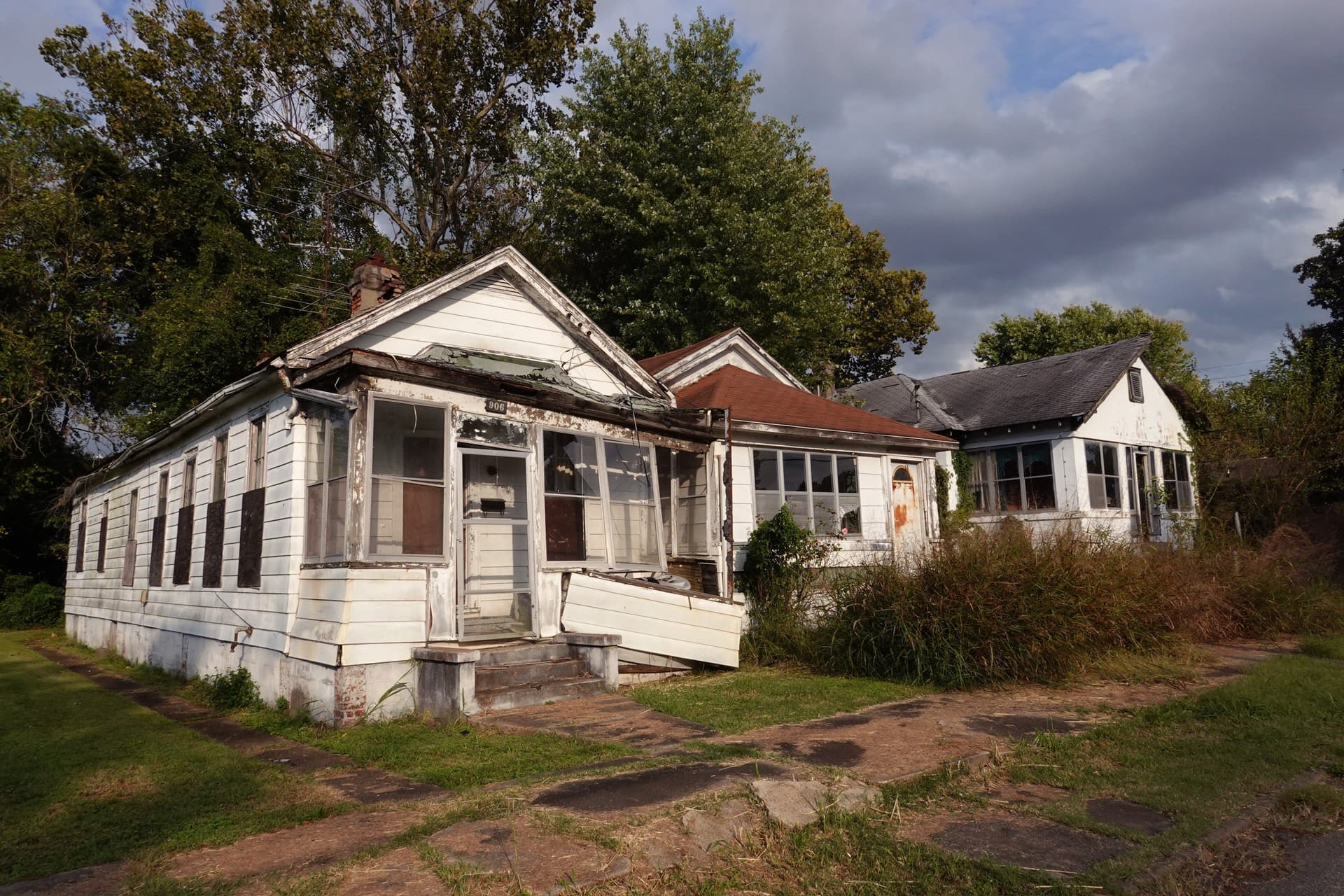
James Dainard bought a house sight unseen. When he finally crossed the threshold, he discovered why the price had been so low: human feces covered the floors, pest infestation was visible in every corner, and the odor was so penetrating that initial contractors refused to enter. This wasn't merely a fixer-upper; it was what the industry calls a 'zombie house'—abandoned during the foreclosure process but technically not yet reclaimed by the bank. In a real estate market where new housing supply remains constrained and prices reach record levels, investors like Dainard are finding opportunities where others see only insurmountable problems.
America's chronic housing shortage has created a paradoxical phenomenon: while millions of Americans struggle to find affordable properties, thousands of abandoned houses languish in legal limbo. According to Federal Reserve data, approximately 1.5 million residential properties remain vacant long-term, many in states with particularly tight housing markets like California, Florida, and Washington. The extreme renovation market has grown 15% annually since 2022, driven by institutional and individual investors seeking returns in market segments traditional buyers avoid. This trend reflects a pragmatic adaptation to market realities: when you can't build new housing quickly, you must rehabilitate what exists, no matter how deteriorated.
The Big Picture

Zombie houses represent a growing but complex niche in America's real estate ecosystem. These properties, abandoned by original owners but technically not yet foreclosed, create a legal vacuum that can last years. During this period, houses deteriorate rapidly—unrepaired water leaks lead to structural damage, pest infestations multiply unchecked, and vandalism becomes a constant threat. James Dainard has transformed over 2,000 such properties across two decades, developing a methodology that combines risk assessment, reputation management, and physical rehabilitation. His A&E series "Million Dollar Zombie Flips" documents this process in Seattle, a market that has experienced one of the most dramatic recoveries since the 2008 crisis, with prices increasing over 120% in the past decade.
Dainard's strategy operates at the intersection of inventory scarcity and calculated risk tolerance. While traditional buyers avoid properties with severe structural issues or damaged reputational histories, specialized investors see opportunity where others see only liability. This approach requires not just significant capital—typically between $100,000 and $300,000 per property—but also the ability to manage multifaceted risks. When Dainard purchased the now-infamous "poop lady house," which had appeared on "Hoarders," he faced not only extraordinary cleanup costs (over $50,000 just in biological remediation) but also the challenge of rehabilitating the property's reputation with potential buyers. This case illustrates how, in modern real estate markets, the narrative around a property can affect its value as much as its physical characteristics.

“"Every time I think I've seen the weirdest thing I've ever seen, I find the next thing, which I kind of get a high out of it because I'm like, 'No way!' It's the shock value. I need the shock value. That's what keeps this business interesting after 20 years," Dainard explains. "But behind the shock value is meticulous analysis: we assess not just what we can see, but what might be hidden behind walls, under floors, in legal histories. A successful zombie house isn't just about cleaning visible filth—it's about cleaning all the problems: physical, legal, and reputational."”
By the Numbers

- Purchase price: $155,000 for the most problematic property, acquired through bank auction after 18 months in foreclosure proceedings
- Renovation cost: $150,000 distributed as $50,000 for biological remediation, $65,000 for structural repairs, and $35,000 for finishes and improvements
- Sale price: $475,000 after 8 months of work, generating $170,000 gross profit before taxes and commissions
- Career projects: Over 2,000 renovation projects completed since 2006, with a 94% success rate on properties considered "lost causes" by other investors
- Experience: More than 20 years operating primarily in Pacific Northwest markets, where housing prices have increased 140% since his start
- Segment growth: Extreme renovation market has grown 15% annually since 2022, compared to 4% for traditional renovation markets
Why It Matters
Dainard's success illustrates a broader economic phenomenon: the hunt for returns in market segments others avoid due to both psychological and operational barriers to entry. In an environment where home prices have reached record levels in many American cities—with the national median price exceeding $400,000 for the first time in 2025—problematic properties offer one of the few paths to significant discounts. But these 30-50% discounts compared to comparable properties in good condition come with hidden costs that extend beyond the financial. Investors must budget not just for physical repairs, but also for legal expenses (lien resolution, ownership disputes), reputation costs (corrective marketing, extended warranties), and temporal risks (permit delays, community resistance).
Dainard's projects also reveal how digital transformation has changed the dynamics of properties with problematic histories. When his purchase appeared on "Hoarders," the property had a permanent digital footprint that potentially affected its value. Dainard responded not just with exhaustive physical cleanup, but with a documented transparency campaign: professional before-and-after photos, remediation process videos, health certificates, and even neighbor testimonials about the neighborhood transformation. This approach shows that in 21st-century real estate markets, where 95% of buyers begin their search online, managing a property's digital narrative is as crucial as repairing its foundation. The lesson is clear: in the information age, reputational stains can persist long after physical stains have been removed.
What This Means For You

For investors and developers, Dainard's model offers fundamental lessons in evaluating and managing non-traditional real estate risks. It's not simply about calculating construction costs—any experienced developer can do that—but about developing a comprehensive mindset that considers all factors that can affect a property's final value. Documented transparency becomes an essential marketing tool, but also a risk management mechanism: by creating a verifiable record of each process stage, investors can mitigate future skepticism and build trust with buyers who might be concerned about a property's history.
- 1Evaluate abandoned properties with a total-cost mindset that includes not only construction expenses (typically 1.5-2 times higher than traditional renovations), but also specific budgets for reputation rehabilitation (5-10% of total cost), unexpected legal expenses (3-5%), and expanded contingency margins (20-30% instead of the typical 10-15%).
- 2Meticulously document each process stage from initial assessment through final sale. This includes timestamped photographs, detailed inspection reports, remediation records (especially for biological or structural issues), and communications with local authorities. This documentation not only builds trust with future buyers but can also serve as legal defense if disputes arise.
- 3Develop relationships with local specialists in critical areas like biological remediation, structural engineering, real estate law specializing in problematic properties, and marketing for properties with complex histories. These properties require teams with specific experience that goes beyond general contractors.
What To Watch Next
Season 2 of "Million Dollar Zombie Flips" premieres April 11, 2026, offering more case studies on this investment strategy in markets beyond Seattle. First-quarter 2026 abandoned housing data, due in May from the Department of Housing and Urban Development, will indicate whether this market segment is growing or stabilizing. Key indicators to monitor include: number of properties in foreclosure limbo for over 12 months (currently approximately 300,000 nationally), foreclosure completion rates (which have decreased 40% since 2019), and sale prices of rehabilitated properties versus comparable properties without problematic histories.
The Federal Reserve's monetary policy decisions in coming months will directly affect these projects' economic viability. If interest rates rise significantly—as projected for late 2026—the margin for costly renovations will shrink, making fewer zombie houses financially feasible. Currently, with mortgage rates around 6.5%, investors need 25-30% gross margins to justify the risks. A 100-basis-point increase could raise that threshold to 35-40%, excluding many marginal properties. Concurrently, regulatory changes at state and municipal levels—particularly around rehabilitation requirements, building codes for abandoned properties, and neighborhood revitalization policies—could create new opportunities or barriers for this investment type.
The Bottom Line
Dainard's model proves even the most problematic properties can become opportunities with the right approach, but it requires risk tolerance few investors possess and execution capability that goes beyond traditional real estate skills. As housing shortages persist—with an estimated 5.5 million unit deficit nationally—zombie houses will continue offering significant discounts to those who can handle not just physical filth and structural challenges, but also legal complexities and reputational stains. The real challenge isn't renovating walls or replacing systems, but rebuilding market confidence—both in the specific property and in the business model's viability. As more investors enter this space, differentiation will no longer be just about who can do the cheapest renovation, but about who can best manage the complete narrative of transforming a property from liability to valuable asset.