Real Estate Pivot: AI Staging Falls Flat, Physical Staging Delivers 16
A $6 billion agent found switching from AI to physical staging delivered 169% more views and 50% more inquiries. Sellers prioritizing emotional connection outpe
B&B
Brick & Bit
April 5th, 2026
7 min readRealtor.com News
Key Takeaways
"Physical staging accelerates that emotional connection and creates a sense of urgency that digital can't match. Buyers don't just see a space; they experience it, and that completely changes their decision process."
AI-staged New York apartments sat unsold for months. Physical furniture changed everything, delivering a 169% view increase and 50% more inq...
The current context of New York's luxury real estate market is particularly challenging. With mortgage rates holding at elevated levels arou...
AI-staged New York apartments sat unsold for months. Physical furniture changed everything, delivering a 169% view increase and 50% more inquiries. In today's cautious housing market, sellers are learning that digital tools have tangible limits. Louise Phillips Forbes of Brown Harris Stevens, with nearly $6 billion in sales, tested both approaches on Manhattan properties—and the numbers don't lie: physical creates more real interest than virtual. This case points to a growing 2026 trend where buyers, after years of pandemic-accelerated digital experiences, seek authenticity and emotional connection in their purchasing decisions.
The current context of New York's luxury real estate market is particularly challenging. With mortgage rates holding at elevated levels around 6-7% in early 2026, and inventory remaining tight in premium segments, buyers are more selective than ever. They're not satisfied with digital representations; they want to experience the space, feel material quality, and visualize their life in the property. Physical staging addresses precisely this fundamental psychological need that AI, however advanced, cannot fully replicate.
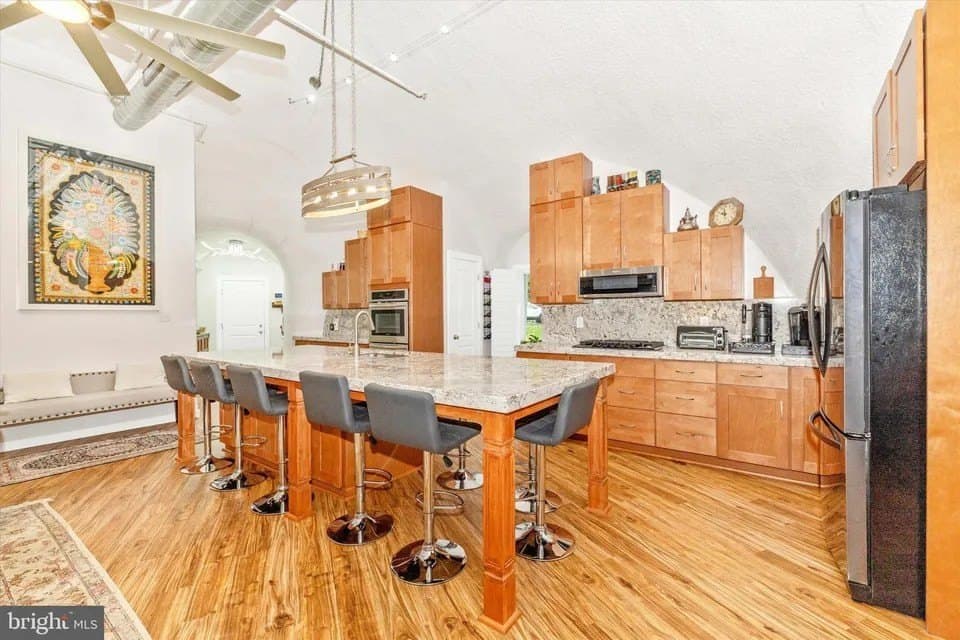
luxury Manhattan apartment with elegant physical staging
The Big Picture
The real estate industry has spent years infatuated with digital tools. From virtual tours to 3D renderings, the promise was clear: greater reach, lower cost, better results. The pandemic accelerated this adoption, making platforms like Matterport and virtual staging tools standard in many markets. But in 2026, with mortgage rates still elevated and buyers more selective, technological efficiency is colliding with human psychology. Forbes' data isn't isolated; it reflects growing digital fatigue among high-net-worth buyers who have been overexposed to virtual representations for years.
Forbes represents a perfect case study. Her properties at West 89th Street and East 62nd Street sat for months with virtual staging unsold. "The technology can tell a story, but often falls flat from real-life touching and experiencing the furniture in a space," she explains. Her strategy shift reveals an uncomfortable truth for AI evangelists: in real estate, tangible still beats virtual. What's interesting is that Forbes didn't abandon digital entirely; rather, she redefined its use. Virtual tools remained part of initial marketing, but physical staging became the centerpiece for in-person showings, creating a more effective hybrid strategy.
“"Physical staging accelerates that emotional connection and creates a sense of urgency that digital can't match. Buyers don't just see a space; they experience it, and that completely changes their decision process."”
The implications of this shift are profound for the industry. For years, many proptech startups have promoted purely digital solutions as the future of the sector, arguing lower costs and greater scalability. However, Forbes' case suggests that in the luxury and upper-mid segments, where transactions regularly exceed $1 million, buyers expect and value high-quality in-person experiences. This doesn't mean AI is irrelevant, but rather that its role needs redefinition as complementary rather than substitutive.
By the Numbers
By the Numbers
View increase: 169% more after switching to physical staging at 440 East 62nd Street
Additional inquiries: 50% more questions and scheduled tours post-change
Staging cost: Between $7,000 and $10,000 per property
Agent's track record: Nearly $6 billion in career sales
Time on market: Months with virtual staging without concrete sales
Property segment: Luxury Manhattan apartments priced between $2M and $5M
Testing period: First quarter of 2026
Cost comparison: Physical staging costs 3-4 times more than premium virtual solutions
comparative chart showing virtual vs physical views with upward trend line for physical
Why It Matters
This isn't just anecdotal. It signals a fork in real estate marketing strategies for 2026. On one side, AI tools keep improving and reducing costs, with companies like Zillow and Realtor.com integrating increasingly sophisticated virtual visualization features. On the other, post-pandemic buyers value authentic in-person experiences more than ever. Physical staging solves the scale problem that virtual can't fully capture: the ability to create a multi-sensory experience that triggers immediate emotional responses in potential buyers.
The immediate winners are interior design and professional staging firms, seeing their value proposition validated against purely digital solutions. Companies like MHM Professional Staging and Designed Staging Solutions report 20-30% increases in inquiries since early 2026, particularly in premium markets like New York, Miami, and Los Angeles. Potential losers are platforms promising magical AI results without understanding that in real estate, emotion remains the primary decision driver, especially in high-value transactions where psychological factors are crucial.
The impact extends beyond marketing. Physically staged properties tend to sell faster and with less price negotiation. Preliminary data from Manhattan brokers suggests physically staged properties sell on average 15-20% faster than their virtually staged or unstaged counterparts. Additionally, the final sale price typically stays closer to the listing price, reducing the typical 3-5% discount seen in properties that linger on the market.
What This Means For You
What This Means For You
If you're selling, the lesson is clear: physical staging isn't an expense, it's an investment with measurable return. Forbes, who 15 years ago thought it was wasted money, is now a firm proponent after seeing results. In properties over $1.5 million, the $7,000-$10,000 cost represents less than 1% of the property value but can significantly accelerate sale timing and potentially increase the final price.
1Prioritize properties that have been on the market for months for a complete physical staging relaunch. Identify those with fewer than 5 showings in 30 days as prime candidates.
2Consider the $7,000-$10,000 cost not as spending, but as a minimal percentage of the final sale price. On a $3 million property, it represents just 0.3%, but can deliver significant returns in sale speed and final price.
3Use digital tools for initial interest generation, but invest in memorable in-person experiences. Create a flow where digital attracts, but physical convinces.
For buyers, this trend means you'll find better-presented properties, making visualization easier but also potentially creating competitive urgency. For agents, it represents an opportunity to differentiate by offering physical staging services as part of premium packages, justifying higher commissions with demonstrable results.
buyers touring staged property with agent explaining features
What To Watch Next
Q2 2026 will bring crucial data. Reports on staged versus unstaged property sales in premium markets like New York and Miami will show if this trend consolidates. Also watch how proptech startups respond: will they integrate physical services or double down on virtual? Companies like BoxBrownie and Virtual Staging Solutions are already exploring hybrid models where they offer both virtual services and referrals to physical stagers.
The coming weeks will also reveal if more agents follow Forbes' lead. If numbers repeat in other cities, we could see a staging resurgence as standard for mid-to-high-end properties, not just the ultra-luxury segment where it's always been common. Markets like Boston, San Francisco, and Washington D.C. will be particularly interesting to watch, as they share similar characteristics with New York: limited inventory, sophisticated buyers, and high-value transactions.
A key catalyst will be the National Association of Realtors report scheduled for May 2026, which will for the first time include specific data on the impact of different staging types on time-to-sale and final prices. Also, watch how new development builders respond: many are already considering including standard physical staging packages in their launch units, recognizing that a strong physical first impression can make the difference in competitive markets.
The Bottom Line
The Bottom Line
AI will transform many industries, but in real estate it's finding its limits. Physical staging proves some human connections can't be fully digitized. For 2026 sellers, the winning strategy blends the best of both worlds: technology for reach, humanity for close. Watch how this balance evolves in coming months, especially in markets where every sale counts double.
The Louise Phillips Forbes case isn't just about furniture versus pixels; it's about how high-value industries are reevaluating the balance between digital efficiency and human effectiveness. As we move through 2026, expect more data validating this trend and more professionals adopting hybrid approaches that recognize the unique strengths of both worlds. For investors, this presents opportunities both in physical staging companies scaling their operations and in proptech platforms that successfully integrate physical and digital in their offerings.