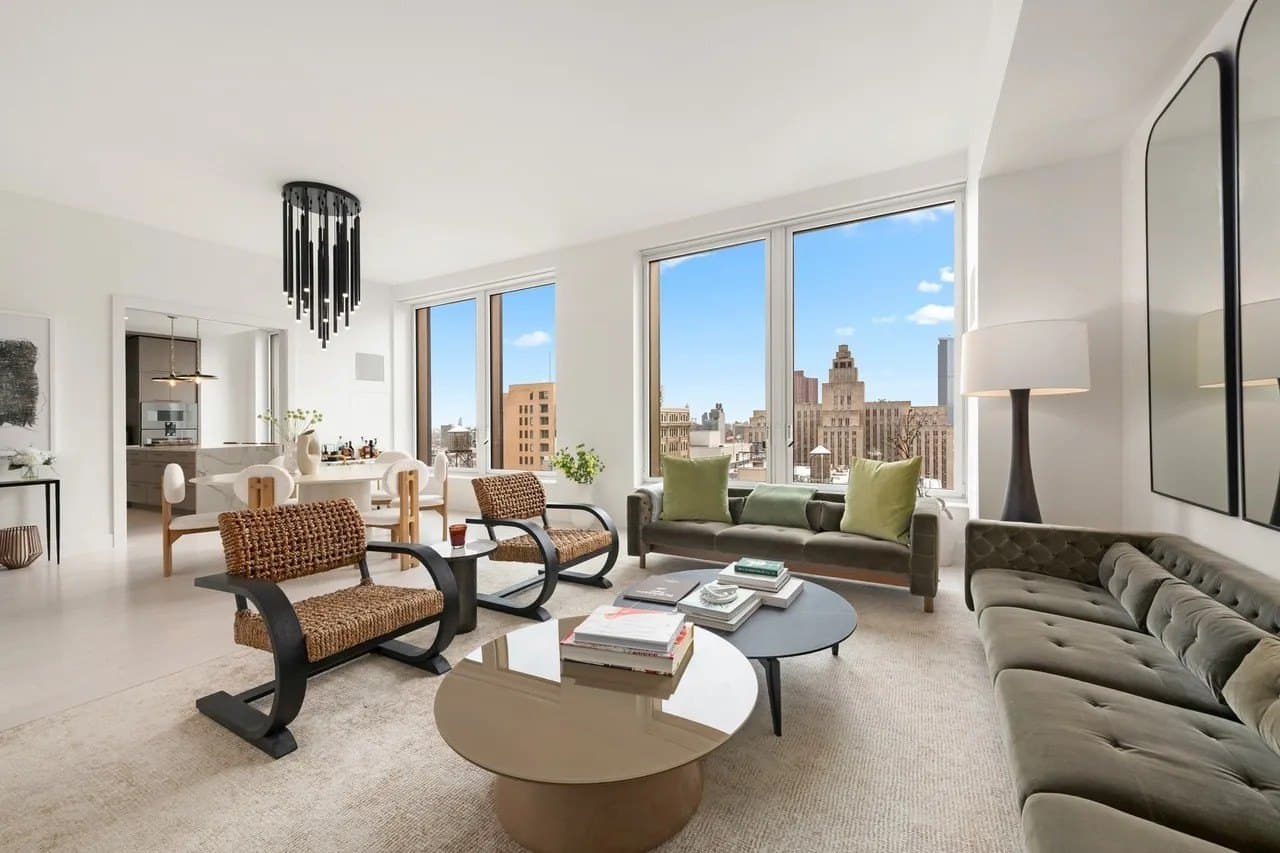
Hugh Jackman's West Village apartment returns to market at $28.75 million, marking a 26% correction from its initial $38.9 million asking price in 2022. This transaction transcends celebrity real estate gossip to become a critical case study in the structural shifts occurring within Manhattan's luxury property market in 2026. The decision to significantly discount the price, following an attempted luxury rental at $125,000 per month in 2023, signals that even the most privileged sellers are confronting a new reality where bargaining power has shifted decisively toward buyers. This pivot reveals deeper market dynamics that every luxury real estate investor, owner, and developer must understand to navigate the evolving landscape successfully.
The Big Picture Manhattan's luxury real estate market has historically operated in a rarefied stratosphere, largely insulated from the economic pressures affecting mainstream housing. Properties above $20 million maintained what seemed like permanent immunity, supported by a global base of ultra-high-net-worth buyers with seemingly limitless appetite for trophy assets. However, Hugh Jackman and Deborra-Lee Furness's decision to apply a 26% discount to their West Village triplex suggests this immunity may be wearing thin. The property, designed by Pritzker Prize-winning architect Richard Meier, was originally purchased in 2008 for $21 million, just before the global financial crisis. Its initial $38.9 million valuation in 2022 coincided with the post-pandemic luxury boom, when remote work fueled unprecedented demand for spacious urban residences with premium amenities and locations.


The journey from $38.9 million to today's $28.75 million listing represents more than a simple price adjustment—it's a tacit acknowledgment that valuation parameters have fundamentally shifted. Despite the discount, the property would still deliver 37% appreciation from the original purchase price if sold at the current asking price, underscoring the long-term resilience of premium assets in prime locations. However, the strategic path taken—from initial sale attempt to luxury rental pivot and now to discounted sale—illustrates the complex calculus facing luxury property owners in today's environment. This case exemplifies how even sellers with virtually unlimited holding capacity are reevaluating exit strategies in a market where buyers have more options, higher standards, and greater negotiating leverage.
“A 26% price cut on a Richard Meier-designed trophy property isn't a minor adjustment—it's a clear signal that Manhattan's luxury market is undergoing a fundamental rebalancing where premium buyers demand more realistic valuations and tangible value propositions.”
By the Numbers - **Current asking price:** $28.75 million, listed March 31, 2026 - **Original 2022 price:** $38.9 million, representing a $10.15 million reduction - **2008 purchase price:** $21 million, potential 37% appreciation if sold at current asking price - **Previous rental ask:** $125,000 per month listed September 2023 - **Potential rental income:** Approximately $4.5 million if maintained from September 2023 through December 2026 - **Square footage:** Exactly 11,000 square feet in triplex configuration - **Bedrooms:** 5 primary bedrooms, all en-suite with generous closet space - **Location:** West Village, Manhattan, among New York's most exclusive neighborhoods - **Architect:** Richard Meier, Pritzker Prize laureate
Why It Matters This transaction serves as a critical bellwether for Manhattan's high-end market psychology and structural health. The 26% discount from 2022's peak pricing indicates that even sellers with unlimited patience recognize today's buyers have more alternatives and higher expectations regarding value received. In a market where premium properties traditionally commanded significant location and design premiums, this correction suggests buyers are applying more rigorous valuation criteria and implicit risk discounts.
The property's journey through multiple strategies—initial sale attempt, luxury rental pivot, then discounted sale—reveals the operational flexibility now required in luxury real estate. The $125,000 monthly rental established in 2023 would have generated substantial income if maintained, but the decision to return to the sales market indicates the owners calculated that asset liquidation offered better reinvestment opportunities or greater financial certainty. This calculus reflects a shift in premium seller psychology, where historically owners preferred holding trophy assets as long-term value stores rather than trading them opportunistically.
Furthermore, the emphasis on "very limited showings" in the current listing signals an evolution in luxury marketing approaches. Whereas maximum exposure was previously sought to justify premium prices, high-profile sellers now prioritize discretion and exclusivity, recognizing that serious buyers in today's market value privacy over publicity. This approach also filters out unqualified buyers, optimizing the time and resources dedicated to the sales process while creating an aura of scarcity that can enhance perceived value among qualified prospects.
What This Means For You For luxury property owners, developers, and investors, this transaction offers concrete lessons about asset management strategies and valuation assumptions in 2026's market. Patience has limits even with premium assets, and strategic flexibility has become essential for maximizing returns in an evolving landscape.

- 1Reassess your valuation benchmarks with current market data: If a Richard Meier-designed West Village trophy property requires a 26% correction from its 2022 peak, your luxury asset likely needs similar realistic adjustments. Analyze recent comparables rather than historical data, and recognize that premium buyers are applying implicit market risk discounts to their valuation models.
- 2Develop hybrid exit strategies with multiple pathways: The sale-rental-resale path demonstrates that flexibility can maximize returns in volatile markets better than rigid holding patterns. Consider luxury rental options as interim strategies while awaiting more favorable sales conditions, but carefully calculate opportunity costs and market timing considerations.
- 3Adapt your marketing tactics to contemporary buyer psychology: The "very limited showings" approach indicates that serious premium buyers value discretion and exclusivity over broad exposure. Instead of mass marketing campaigns, invest in targeted outreach to qualified buyers and create narratives of scarcity and exclusivity that resonate with today's luxury consumer psychology.
What To Watch Next The ultimate outcome of this sale will provide crucial data about the true depth of Manhattan's luxury market in 2026. If the property sells near the $28.75 million asking price, it will suggest that premium buyers remain active but expect meaningful discounts from historical peak valuations. This scenario would confirm substantial demand exists in the ultra-luxury segment, albeit at more conservative valuation levels that reflect current economic realities.
If, conversely, the property lingers on the market for an extended period or requires additional price reductions, it would indicate that even adjusted prices may not meet buyer thresholds for perceived value in today's context. This outcome would send a more concerning signal about the health of the market's highest tier and potentially trigger broader reassessments among luxury property owners.
Also watch how this transaction influences comparable listings in West Village, Tribeca, and other premium Manhattan neighborhoods. Celebrity sales often establish psychological benchmarks that ripple through adjacent markets, affecting valuation expectations and pricing strategies. Real estate professionals and appraisers will be monitoring this case closely to calibrate their own valuations and advise clients accordingly.
The architectural dimension adds another layer of market specificity. Properties designed by Richard Meier occupy particular market niches with buyers who specifically value modernist design and architectural prestige. The performance of this sale could indicate whether this niche maintains its traditional resilience or is also subject to broader market pressures affecting luxury real estate generally.
Finally, observe the broader implications for the luxury rental market. The decision to abandon the rental strategy ($125,000 monthly) in favor of sale suggests the owners calculated that rental returns didn't justify long-term holding. This could indicate pressures in the ultra-luxury rental segment, where supply has grown significantly in recent years while demand shows signs of saturation or shifting preferences among temporary luxury residents.
The Bottom Line Hugh Jackman's West Village apartment is more than celebrity real estate—it's a precise thermometer for measuring the temperature of Manhattan's luxury property market. The 26% price reduction from 2022, combined with the strategic pivot from rental back to sale, reveals an environment where even the most privileged sellers must adopt pragmatic, flexible approaches. For 2026, the lesson is clear: In the premium property market, the right price is no longer what sellers wish based on historical peaks, but what buyers are willing to pay after meticulously evaluating every alternative in a market that offers more options and where perceived value has become critically important. This transaction may mark an inflection point where Manhattan's luxury market begins operating under rules more aligned with general economic realities—maintaining its exclusivity but losing some of its historical immunity to market corrections.